
Maybe it started on an ordinary weekday.
The words you used to pray without effort began to feel like lifting a wet coat off the floor, a friend snapped at you over nothing, and the old fear you thought you had buried came back at three in the morning with its shoes on.
Then someone at church used the phrase “spiritual warfare,” and something in you went quiet. Is that what this is?
I have kept notes on this subject for years, and my honest answer is: sometimes.
You’ll leave with twenty-one signs that Christian writers have described since Paul, the passages they grew out of, and a few plain things to do on the nights when everything feels heavier than it should.
Spiritual warfare, as Paul wrote it from prison
Nearly every serious conversation about spiritual warfare ends up in the last chapter of Ephesians.
I think that’s the right place to start, because the passage is calmer than its reputation.
Finally, my brethren, be strong in the Lord, and in the power of his might. Put on the whole armour of God, that ye may be able to stand against the wiles of the devil. For we wrestle not against flesh and blood, but against principalities, against powers, against the rulers of the darkness of this world, against spiritual wickedness in high places. Wherefore take unto you the whole armour of God, that ye may be able to withstand in the evil day, and having done all, to stand.
Paul wrote this as a prisoner.
A few verses later (6:20) he calls himself an ambassador in chains, and his readers lived in Ephesus, the city where, according to Acts 19:19, people who had practised magic carried their books into the open and burned them, books valued at fifty thousand pieces of silver.
So these readers knew the occult up close. What the apostle hands them is surprisingly plain.
Look at the verbs.
He says stand twice and withstand once, and he never once says charge.
The armour he lists right after it in verses 14 to 17 is made of truth, righteousness, peace, faith, salvation and the word of God, and none of it needs a special technique or a special person to use.
That shapes how I read the twenty-one signs. In this frame, an attack is whatever knocks you off your feet, and the answer is to get back on them.
21 signs, grouped by where they press
These signs come from Paul’s letters, from the rules Ignatius of Loyola wrote for the discernment of spirits, from the Puritan Thomas Brooks (1608-1680), whose 1652 book Precious Remedies Against Satan’s Devices sorts the enemy’s tactics the way a field manual sorts an opponent’s moves, and from what pastors and spiritual directors still describe in their offices today.
Treat them as readings.
None of them proves anything alone.
Some hard seasons are only hard seasons.
In your prayer life
#1 Prayer goes kind of flat the very month you decide to take it seriously. The timing is the tell. Many Christian writers read resistance that arrives right after a resolution as opposition to the resolution itself.
#2 You run out of time for scripture, and the reasons change every day while the result stays exactly the same.
#3 Guilt shows up with no particular sin attached. Brooks gave a whole part of his book to the devices that leave believers sad, doubting, questioning and uncomfortable. In the Puritan reading, conviction from God names a specific thing to repent of, while accusation names you.
#4 God feels far away, and you begin to treat the feeling as a fact. Ignatius called this desolation. In his fourth rule he describes it as a darkness and disturbance of soul, a pull toward low things, in which a person feels sluggish and somehow cut off from the Lord.
Which of these four showed up earliest for you?
Inside your own thoughts
#5 One accusing sentence plays on repeat. It’s short, it sounds like your own voice. Paul’s answer to it is the passage about taking thoughts captive, which I’ll come to in the scripture section.
#6 Thoughts arrive that feel foreign to you, ugly or frightening, and the harder you push them away the louder they get. I’ll say this plainly, because I care more about you than about a category: if they have lasted for weeks, or they turn toward hurting yourself, tell a doctor or counsellor as well as your pastor, today if you can.
#7 You feel sudden pressure to make a big decision in a dark stretch. Quit, move, end the friendship, leave the church. Ignatius has a rule for exactly this, and it’s the one I’d save if I could save only one.
#8 Small temptations land precisely where you are tired. Thomas à Kempis saw the same pattern six hundred years ago, and his image of fire and iron is worth a section of its own.
At what hour of the day do your thoughts turn against you?
At 3 a.m.
#9 You wake at the same hour, night after night, with dread already sitting in your chest.
#10 Nightmares cluster before an important day: a baptism, an interview, a hospital appointment, the Sunday you’re due to serve for the first time.
#11 Fear arrives with no object at all. Nothing is wrong, and everything feels wrong. My own habit at that hour is to take the word stand literally, to get up, put my feet on the cold floor and say the Lord’s Prayer out loud, slowly, twice if the opening attempt was rushed.
What do you reach for at that hour?
Right before something good
#12 Opposition spikes right after you say yes to God. The pattern is old. In Matthew’s Gospel, Jesus goes from his baptism straight into the wilderness to be tempted (Matthew 3:16 to 4:1).

#13 Delays pile up that make no sense: paperwork lost, a door that was open closing for a month. Daniel 10 has become the comfort passage for this sign, and with good reason.
#14 Exhaustion hits after a victory, deeper than the effort explains. Elijah is the patron saint of this one.
Did the heaviness begin just after a decision you made?
Between you and the people you love
#15 Friction flares at home on the mornings you mean to pray or worship together. Plenty of Christian households know the Sunday morning argument in the car.
#16 You start to isolate, sure that nobody would understand. Ignatius speaks straight to this in his thirteenth rule. The enemy, he wrote, wants his suggestions kept secret, and nothing grieves him more than when you lay them open to a confessor or to another spiritual person who knows his tricks.

#17 You hear contempt where there was only tiredness. The flesh-and-blood line in Ephesians matters here. Whatever you are up against, it isn’t your husband or your sister.
Who is the one person you could tell before Sunday?
Signs of spiritual warfare that look like success
#18 Praise makes you careless. Things go well, you skip the quiet hour, and then you skip it again. Brooks described this under his opening device, the bait that hides the hook.
He promises the soul honor, pleasure, profit—but pays the soul with the greatest contempt, shame, and loss that can be.
Thomas Brooks, Precious Remedies Against Satan’s Devices (1652), Device 1, Grace Gems edition
The temptation he means tends to arrive dressed as a promotion.
#19 Your calendar fills until there’s no room for silence, and every single item on it is good.
Is anything going well right now that has quietly crowded out your time with God?
The quiet ones
#20 A grey boredom settles over everything holy. The desert monks had a word for it, acedia (a Greek term for a listless, restless weariness with spiritual things), and Evagrius Ponticus linked it to the noonday demon of Psalm 91 because it struck in the long, hot middle of the day. The whole thing feels like boredom, which is why so few people pray about it.

#21 You decide none of this applies to you. A famous line turns up on quote cards and in sermons, with no source at all: “The greatest trick the Devil ever pulled was convincing the world he didn’t exist.”
It comes from the film The Usual Suspects (1995), and the idea behind it goes back to Charles Baudelaire (1821-1867), whose 1864 story “Le Joueur généreux” has the Devil himself recall a preacher who said it, as Quote Investigator traces in detail. Baudelaire was being ironic. His preacher still had a point.
Which sign on this list did you want to skip?
Daniel’s twenty-one days
Daniel is an old man in this chapter, living under Persian rule, and he has spent three full weeks mourning, eating no pleasant bread (10:2 to 3).
Then a messenger appears and explains the silence.
Then said he unto me, Fear not, Daniel: for from the first day that thou didst set thine heart to understand, and to chasten thyself before thy God, thy words were heard, and I am come for thy words. But the prince of the kingdom of Persia withstood me one and twenty days: but, lo, Michael, one of the chief princes, came to help me; and I remained there with the kings of Persia.
Daniel 10:12-13, KJV
Notice the order.
The prayer was heard on the first day, and the answer was already travelling.
What Daniel lived as silence was, in this account, twenty-one days of resistance he couldn’t see. Readers disagree about the prince of Persia.
Many commentators take him as a spiritual power standing behind the empire, while John Wesley’s notes read the verse partly through the scheming of the Persian court under Cambyses.
I find the spiritual reading more natural, since Michael is named as a fellow prince in the same sentence. Either way, the comfort holds: heard on day one.
The second passage answers sign five. Paul is defending himself to the church at Corinth, where critics said his letters were weighty and his bodily presence weak (10:10).
(For the weapons of our warfare are not carnal, but mighty through God to the pulling down of strong holds;) Casting down imaginations, and every high thing that exalteth itself against the knowledge of God, and bringing into captivity every thought to the obedience of Christ;
2 Corinthians 10:4-5, KJV
The fortresses in these verses are built from arguments and imaginations.
The picture is a soldier catching a thought at the gate and walking it, under guard, to Christ, which is a far gentler image than arguing with yourself all night.
The third passage almost never appears in lists like this one, and I’ll be honest that it isn’t about demons at all.
Elijah has just faced down the prophets of Baal on Mount Carmel (1 Kings 18)
. One threat from Jezebel and he runs a day’s journey into the wilderness, sits under a juniper tree and tells God he has had enough.
And as he lay and slept under a juniper tree, behold, then an angel touched him, and said unto him, Arise and eat.
1 Kings 19:5, KJV
God’s opening answer to the prophet’s despair is a meal and a nap, then a second meal (19:7). No rebuke comes, and no lecture. I include it because sign fourteen gets answered too spiritually in a lot of churches, when sometimes the holiest thing you can do is eat something warm and go to bed.
“Fire testeth iron”
Thomas à Kempis (1380-1471) wrote The Imitation of Christ for monks, but his chapter on resisting temptation reads as if he had in mind anyone with a phone and a bad night.
As fire testeth iron, so doth temptation the upright man. Oftentimes we know not what strength we have; but temptation revealeth to us what we are.
Thomas à Kempis, The Imitation of Christ, Book 1, Chapter XIII, tr. William Benham (1886).
I part ways with him slightly. A bad night shows you a moment of yourself, and a moment is smaller than a whole person. Still, I love that he treats the struggle as information. You learn where your iron is thin.
C.S. Lewis opened The Screwtape Letters (1942) by naming two equal and opposite errors people make about devils. He put the opening error in seven words: “One is to disbelieve in their existence.”

The second, in his telling, is to believe in them and grow excessively and unhealthily interested, and he added that the devils are pleased by either mistake. I set that warning beside these twenty-one signs like a guardrail.
Notice the pattern, then turn your face toward the One Paul told you to be strong in.
The one piece of folk history I’ll allow myself is a stain. Visitors to the Wartburg, the castle where Martin Luther hid after 1521 and translated the Greek scriptures into German, were long shown a dark spot on the wall where Luther had supposedly hurled his inkwell at the Devil.
The historian Scott Hendrix, writing for Christian History, calls the tale a fabrication.
In its earliest version, from the end of the sixteenth century, the Devil threw the ink at Luther, which makes it the only recorded case of Satan losing an argument and then vandalising the furniture. The spot is no longer on the wall.
The Buddha and Mara’s armies
Other traditions have mapped this inner fight.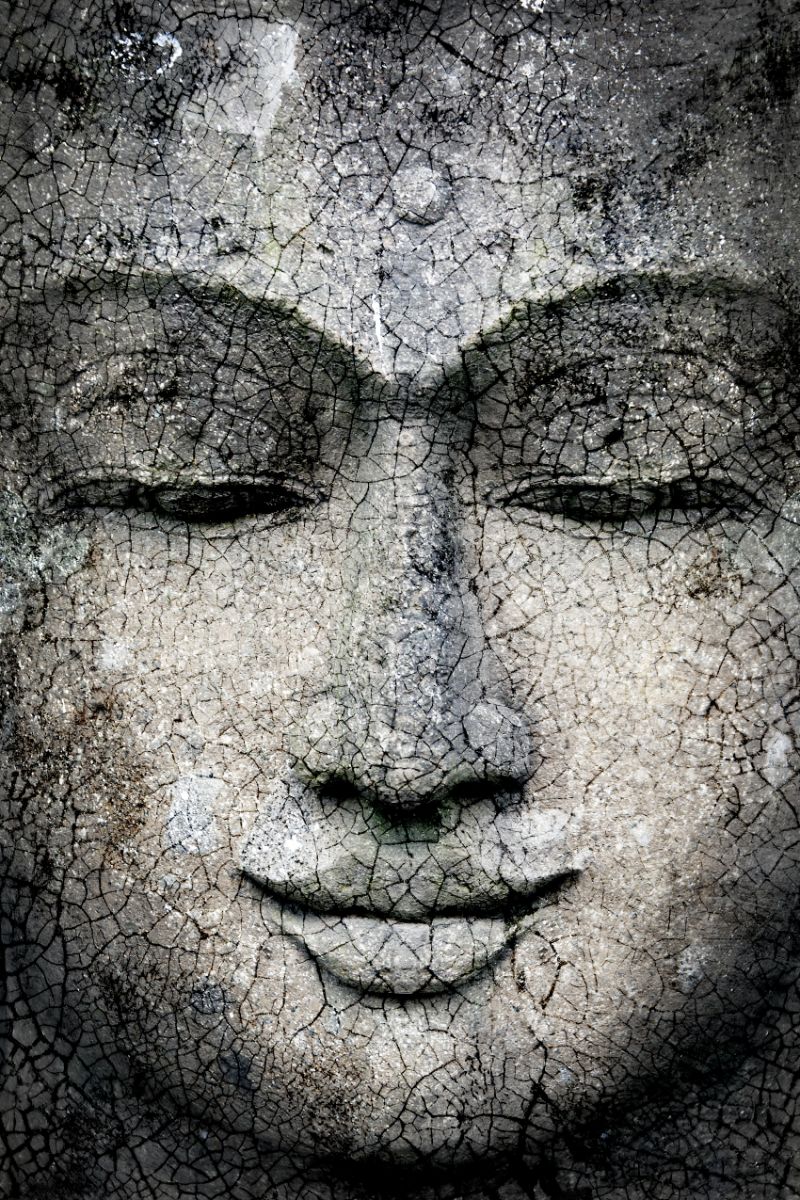
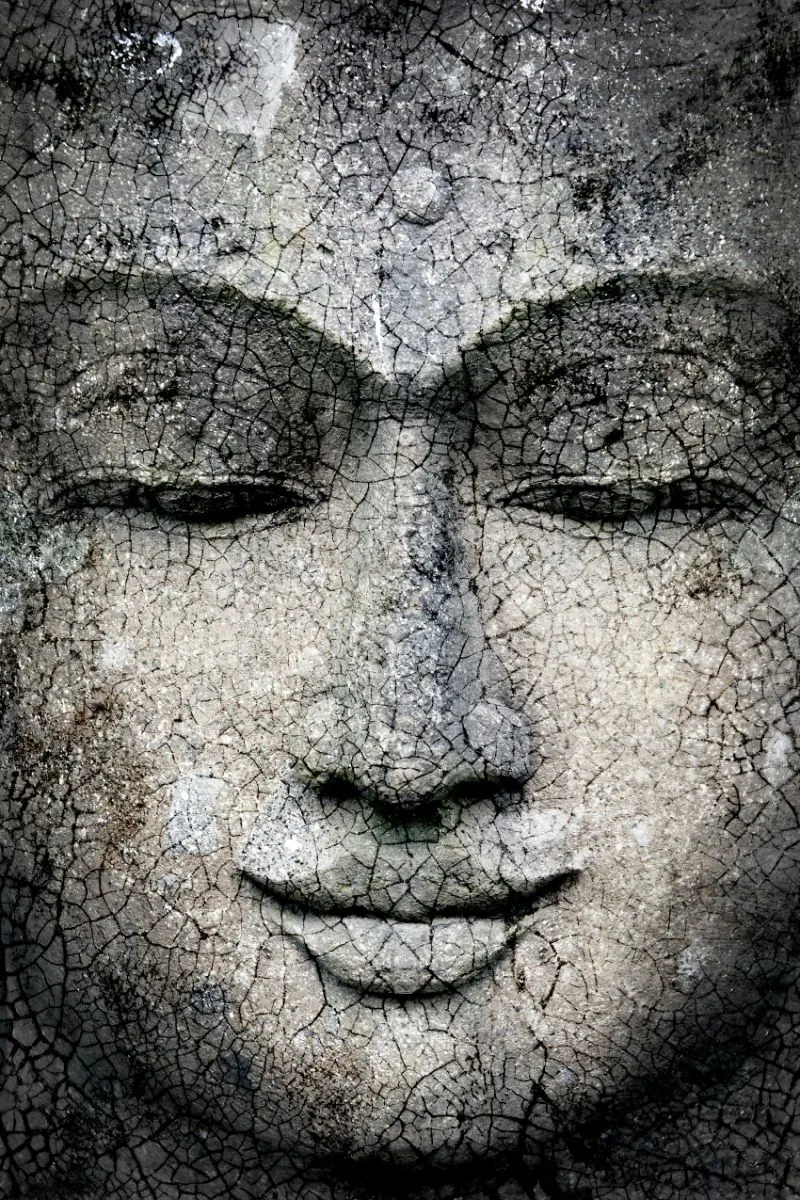
In the Padhana Sutta, a short discourse in the Sutta Nipata (3.2), the Buddha recalls his years of striving by the river Neranjara, when Mara came speaking words of false compassion and urged him to give up and live comfortably.
The Buddha answers by naming Mara’s army rank by rank. In Thanissaro Bhikkhu’s translation, the roll call opens: “Sensual passions are your first army.”
The ranks that follow are discontent, hunger and thirst, craving, sloth and drowsiness, terror, uncertainty, hypocrisy and stubbornness, and finally gain and fame wrongly won, along with the habit of praising yourself while running others down.
Buddhists don’t read Mara as the Christian Satan, and I’d be wrong to fold the two together, since Mara personifies death and whatever holds a mind in bondage. But set his army beside signs seven, nineteen and twenty and the overlap is hard to miss.
Two traditions that part company on a great deal agree that the fight often arrives as doubt, or as a quiet hunger for applause.
What to do with a hard week
The rule I promised in sign seven is Ignatius’s fifth, and I think it’s the most practical sentence anyone has written on this subject.
The fifth: In time of desolation never to make a change; but to be firm and constant in the resolutions and determination in which one was the day preceding such desolation, or in the determination in which he was in the preceding consolation.
Ignatius of Loyola, The Spiritual Exercises, Rules for the Discernment of Spirits, tr. Elder Mullan (1914).
In plain words: don’t decide anything big while you’re in the fog. Keep the course you set when you could see. I have never regretted following this rule, and I’ve regretted ignoring it more than once.

Beyond that, the practice is ordinary on purpose. Eat a real meal and sleep, the way Elijah did.
Tell one trusted person what is going on, because in Ignatius’s reading secrecy is exactly what the enemy prefers.
Go back to the passage I quoted near the top and read all four verses standing up and aloud. And then write, even if it’s only a few lines before bed.
- Which of the twenty-one signs did I recognise earliest, and when did it begin?
- What decision am I tempted to make this week that I would not have made a month ago?
- Who could I tell, and what stops me?
- Where in the last month did I stand, even badly, even for one evening?
If words fail, here is a short prayer in my own words. Treat it as a place to start.
Lord, I can’t always tell what is pressing on me.
You can, and you heard me on the first day.
Keep me standing when standing is all I can do.
Feed me when I forget to eat, and put someone beside me.
Take every thought I can’t hold and carry it to Christ. Amen.

Julian of Norwich (1343-after 1416) received her visions in May 1373, during an illness that nearly killed her, and spent the rest of her life thinking about them in a small cell beside St Julian’s Church. Near the end of her book she sets down the line I’d want you to carry out of here.
He said not: Thou shalt not be tempested, thou shalt not be travailed, thou shalt not be afflicted; but He said: Thou shalt not be overcome.
Julian of Norwich, Revelations of Divine Love, Chapter LXVIII, ed. Grace Warrack (1901).
Notice what she leaves in. The storms and the labour stay on the list. What would change this week if you believed the last clause?