
You saw it before you understood what you were seeing.
A dark shape turning slow circles over the road, or a bird with a barred chest sitting on a fence post as if it had been waiting for you to pass.
Then it was gone, and something in you stayed alert for the rest of the day.
That alertness is the message.
A hawk lives by sight, and when one crosses your path it asks you to look at your life from higher up, with clearer eyes and less fear.
Below you’ll find what the hawk means in the moments people most write to me about, what scripture says about this bird, and a small practice for the week ahead.
26 Doth the hawk fly by thy wisdom, and stretch her wings toward the south? 27 Doth the eagle mount up at thy command, and make her nest on high? 28 She dwelleth and abideth on the rock, upon the crag of the rock, and the strong place. 29 From thence she seeketh the prey, and her eyes behold afar off.
Job 39:26-29, King James Version.
These lines come near the end of the book, when God finally answers Job out of the whirlwind.
Job has lost his children and his health, and he has demanded an explanation. God doesn’t give him one.
He walks him through creation instead, from the wild goats on the crags to the war horse, and then He points to the hawk.
I find that one of the most tender moments in the whole Bible.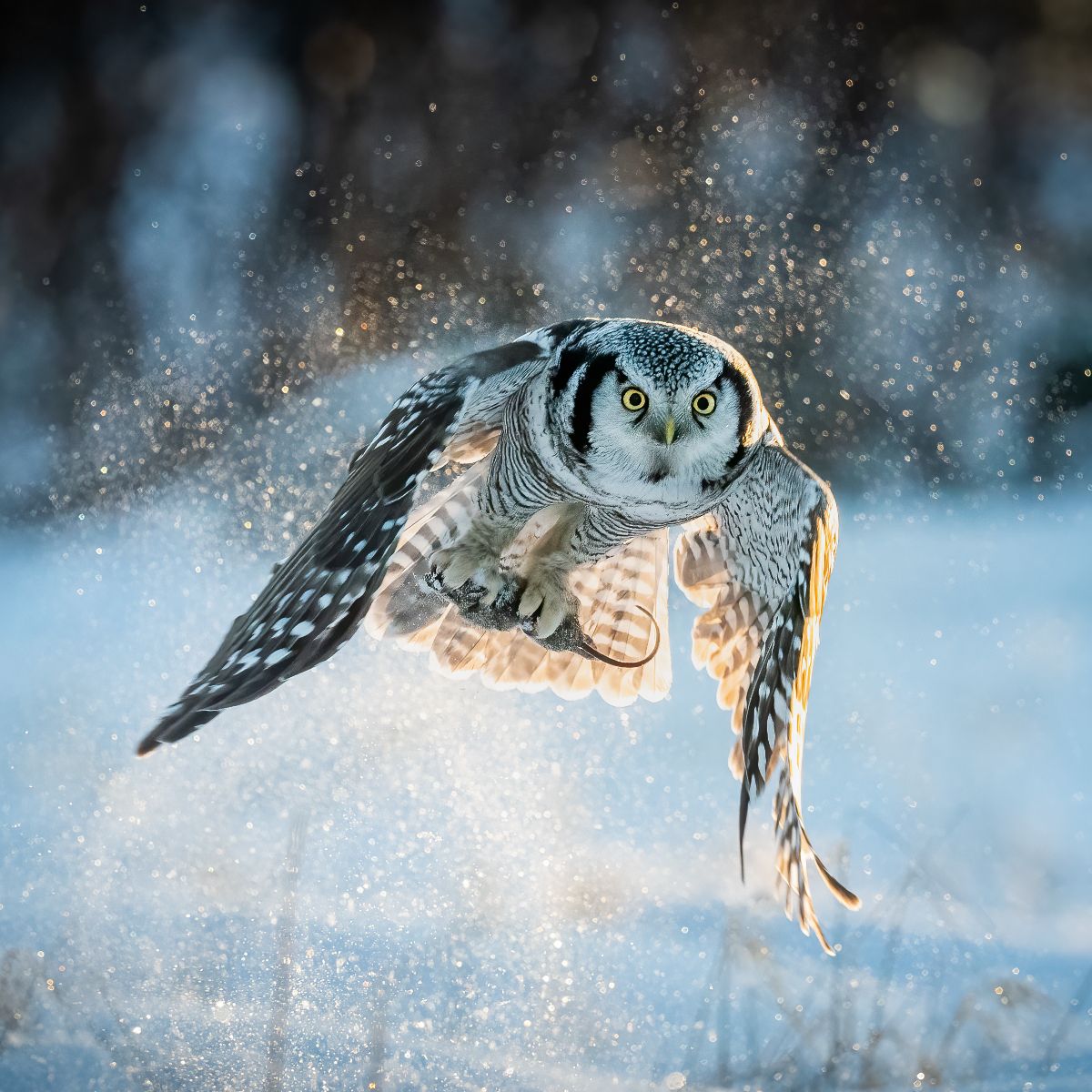
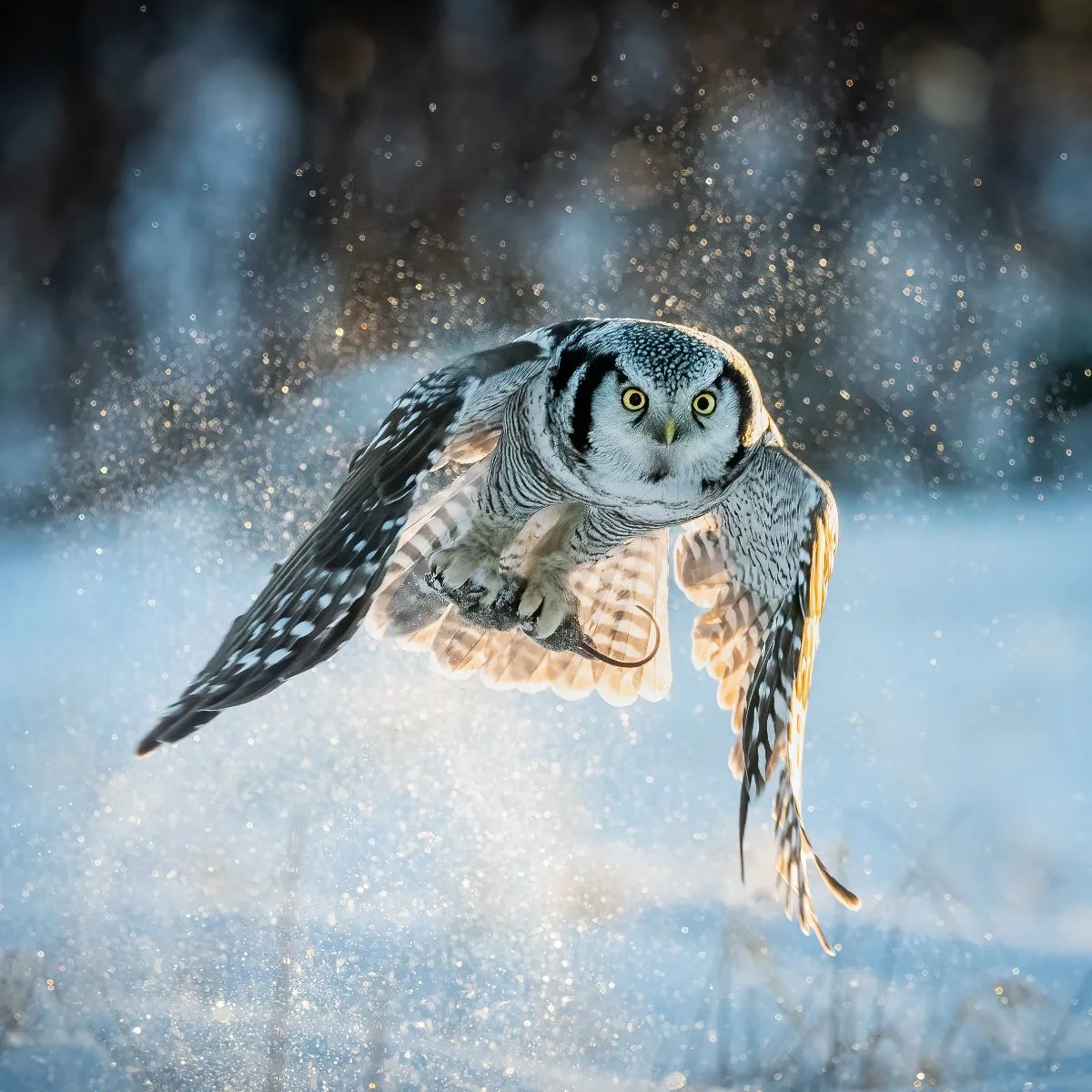
Nobody taught that hawk to find the warm wind toward the south, and nobody had to.
The same hand that steers her wings is holding a man who has nothing left.
So the first meaning of the hawk is this one. You are being carried by a wisdom that is older and steadier than your own, even on the days you can’t feel it.
Hawk spiritual meaning, read from the sky down
The hawk is a messenger of vision. Its gift is the long view, the ability to see the whole field and the one small movement in it that matters.
When a hawk appears to you, spirit is usually asking you to rise above the noise of a situation and see what is actually true. I’ve learned to read the sign by where the hawk was and what it was doing, because the setting carries half the message.
A hawk circling high above you
A hawk riding slow circles on a thermal (a rising column of warm air) isn’t working hard. It holds its wings open and lets the air lift it. When you see this, the sign is about trust.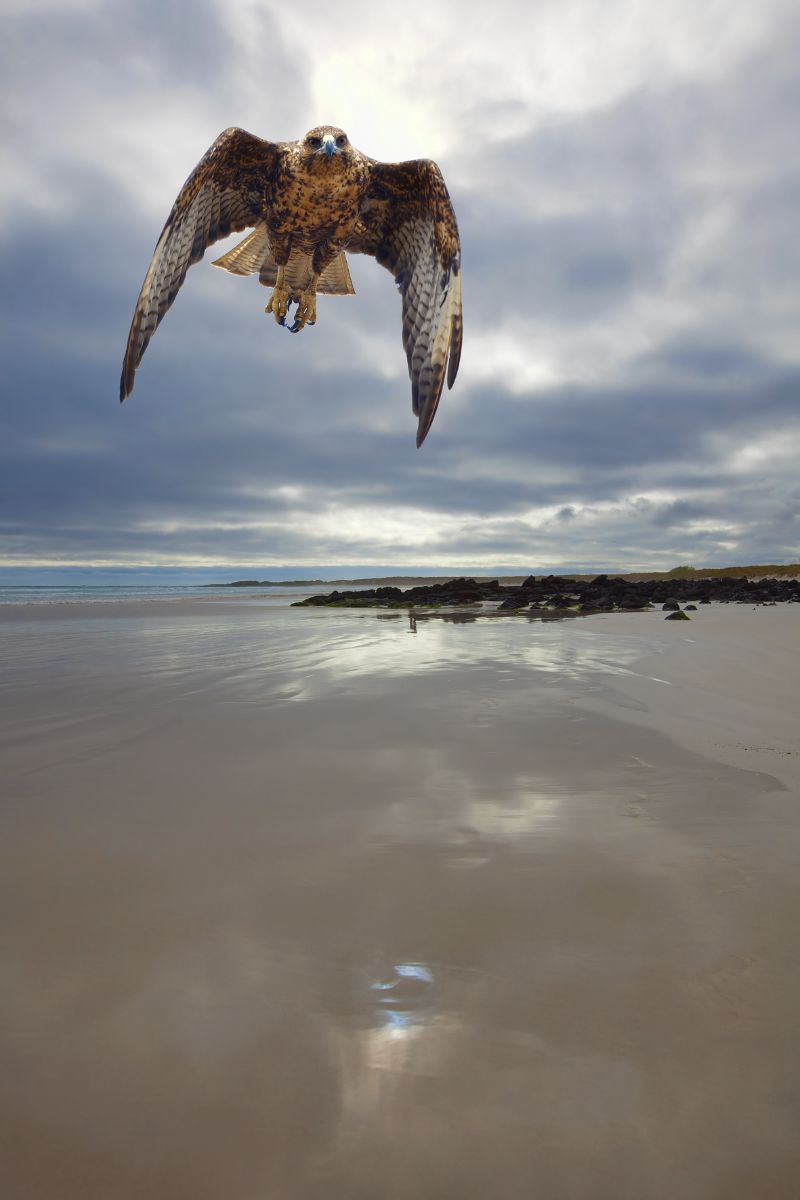
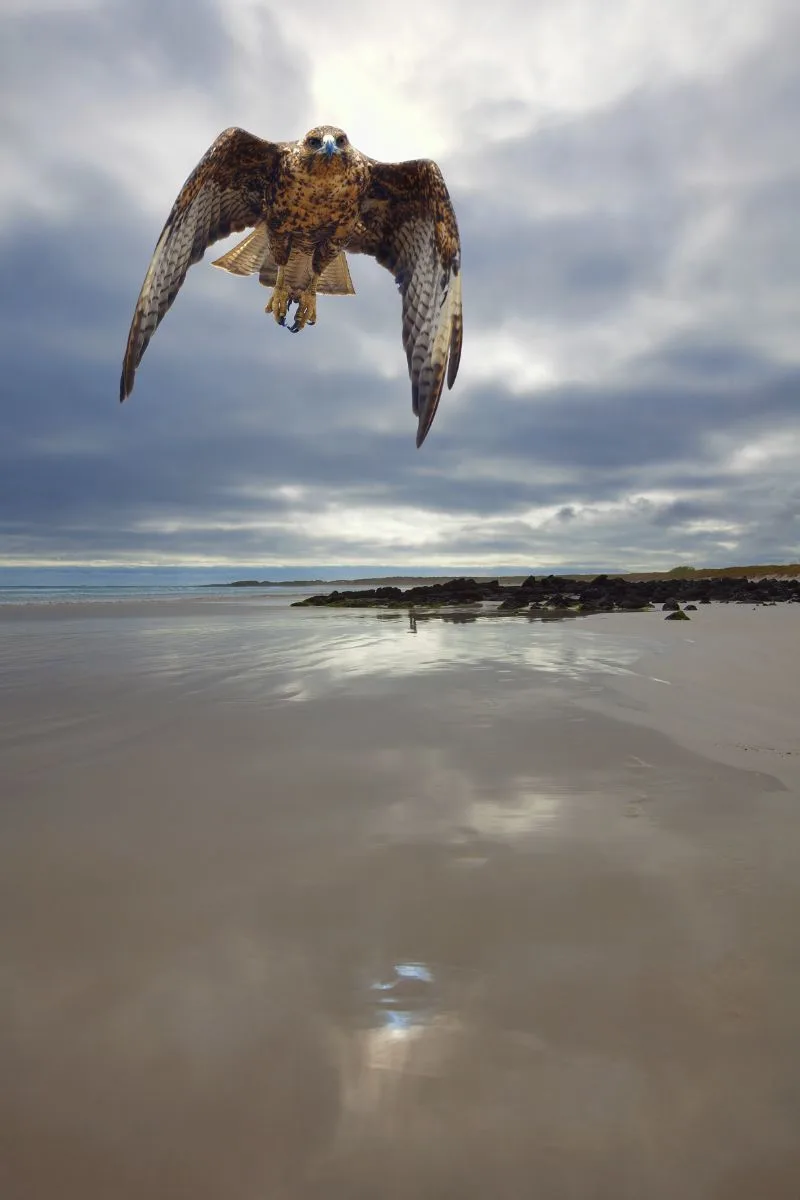
You’ve been flapping. The hawk shows you there is a current under you already, and that rest and height can come together.
If you have been praying about a decision, take the circling hawk as permission to stop forcing it for a few days and let the answer rise to meet you, the way warm air rises to meet those wide and patient wings.
See it from above, as the passage at the top of this page describes, with eyes that behold afar off.
When a hawk lands close to your home
A hawk on your roof or in a tree by your door is a sign of protection and of attention. Hawks perch where they can watch. Spiritually, one that settles near your house is a reminder that your household is seen and guarded, and a quiet nudge to watch over it yourself. Who in your home needs more of your attention right now?
I always tell readers to notice how long it stays. A hawk that lingers while you stand at the window is a sign that you’re meant to slow down and receive a word. One that leaves at once has already said what it came to say.
A hawk crossing in front of your car
This one startles people, and it should. A hawk sweeping low across the road ahead of you is a call to wake up and pay attention, kind of a spiritual tap on the shoulder.
It can point to the road itself, so drive with care that day. In my experience it points more to the direction of your life, asking whether you’re still choosing the route or just following the traffic.
Finding a hawk feather
A feather is the hawk’s message left behind for you to keep.
Hawk feathers carry the energy of focus and courage, and plenty of believers keep one on a prayer shelf or tucked into a Bible at a verse that matters to them. If you find one, hold it and ask what you’ve been afraid to look at directly.
Then face it.
One practical note from the believer who also likes to stay out of trouble.
In the United States, hawks are protected under the Migratory Bird Treaty Act, which makes it illegal to keep their feathers without a permit, even ones that dropped naturally. Take a photograph, say your prayer over it, and leave it on the ground.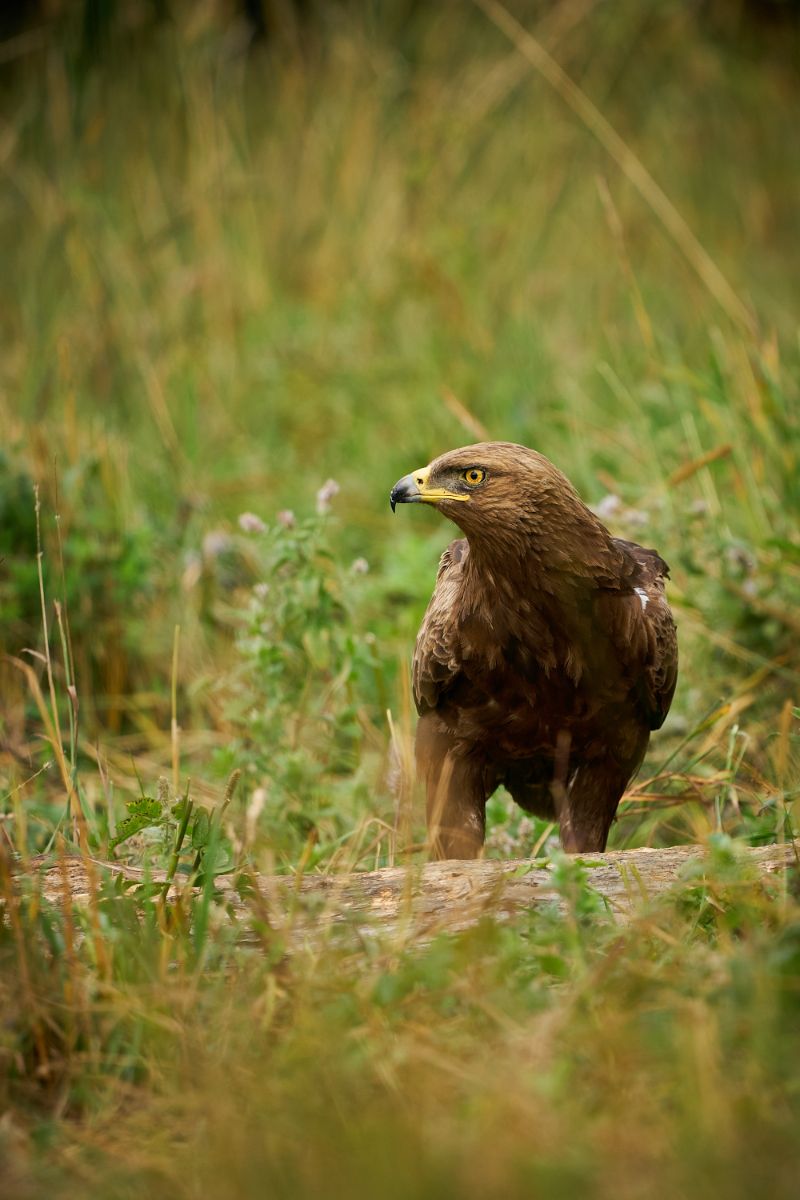
Seeing a hawk after someone has died
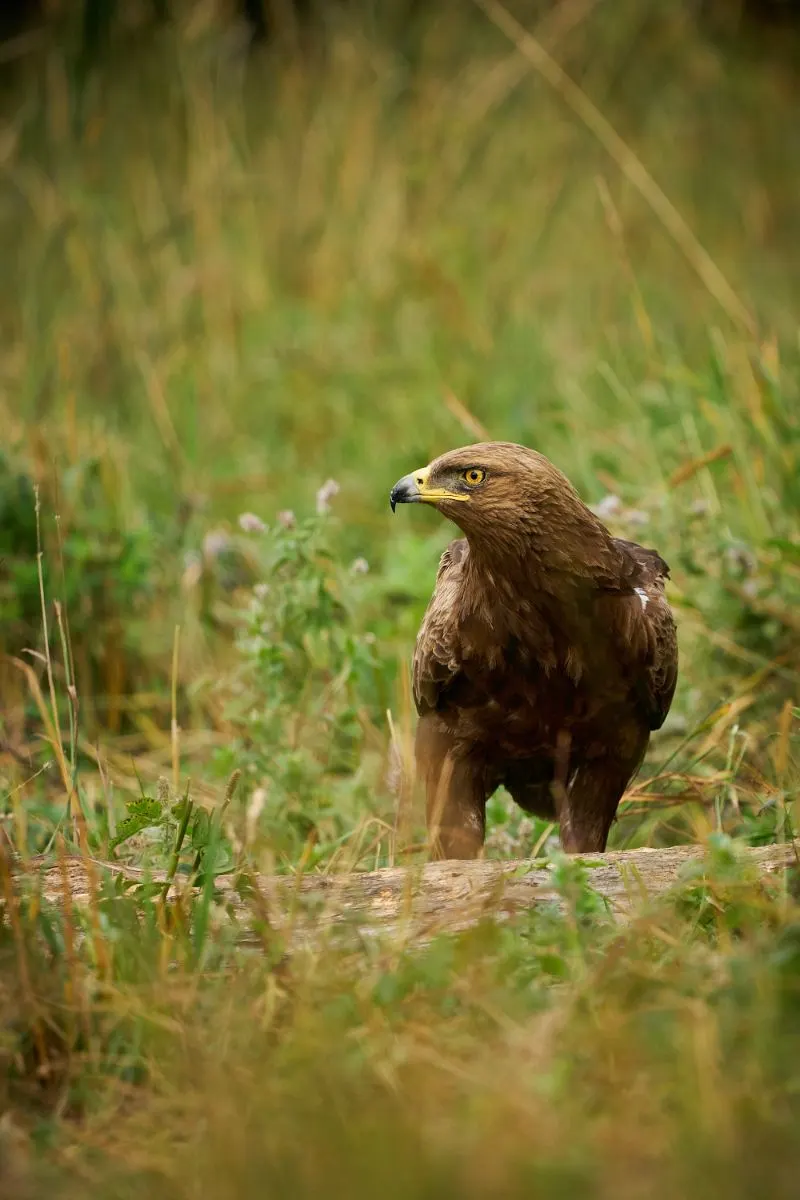
So many readers write to me about this. A hawk appears on the morning of the funeral or in the quiet weeks after, landing close enough to study. And the heart says, at once, that’s them.
I won’t tell you who sent that hawk. I will tell you that the love you feel in that moment is real, and that the God who feeds the birds is not far from your grief. Let the hawk be a doorway for speaking to the one you miss, and let it remind you that your loved one is held by the same wisdom that holds the hawk’s wings. That is enough to carry you to the next morning.
Hawk spiritual meaning in dreams
A hawk in a dream is your soul’s own sight showing up at night. If the hawk is flying, you’re being shown that you can see further than you think in a waking situation.
If it is perched and watching you, something in your life needs honest attention. A hawk diving toward something in the dream points to a goal you’re ready to go after, and a hawk that flies away is asking you to let go of a thing you’ve been gripping.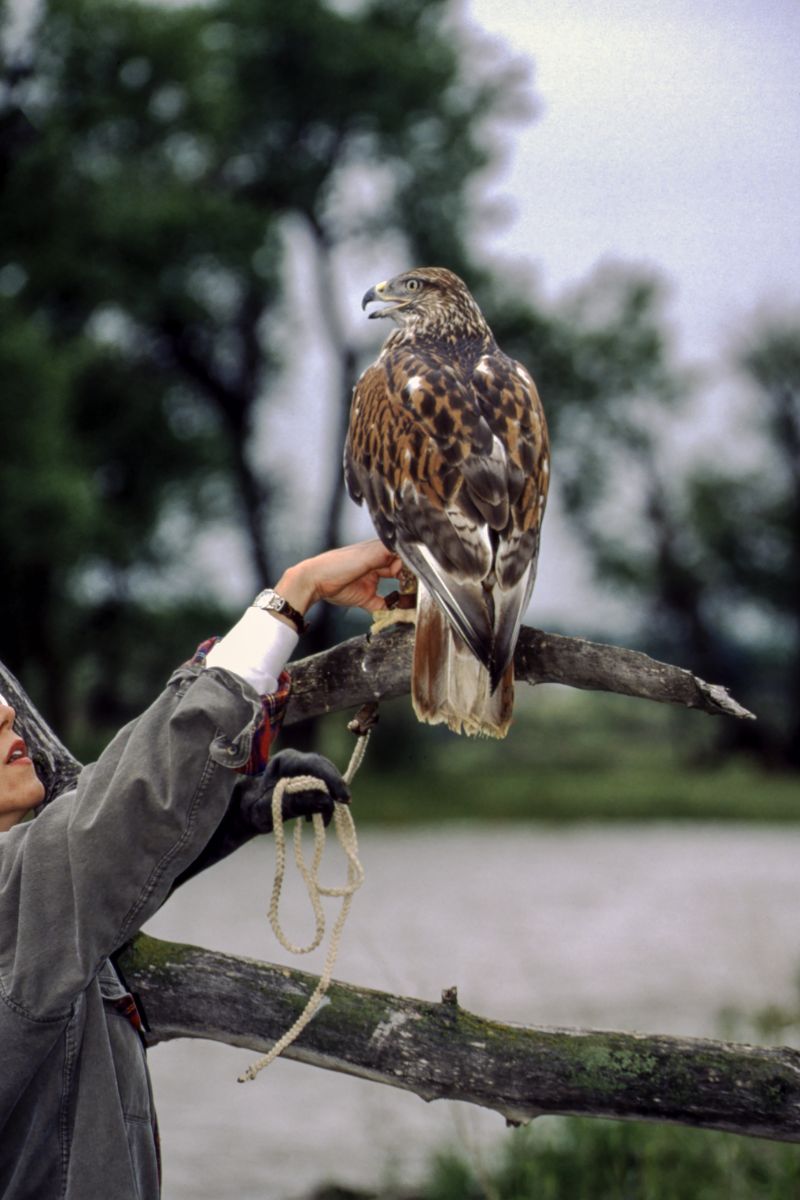
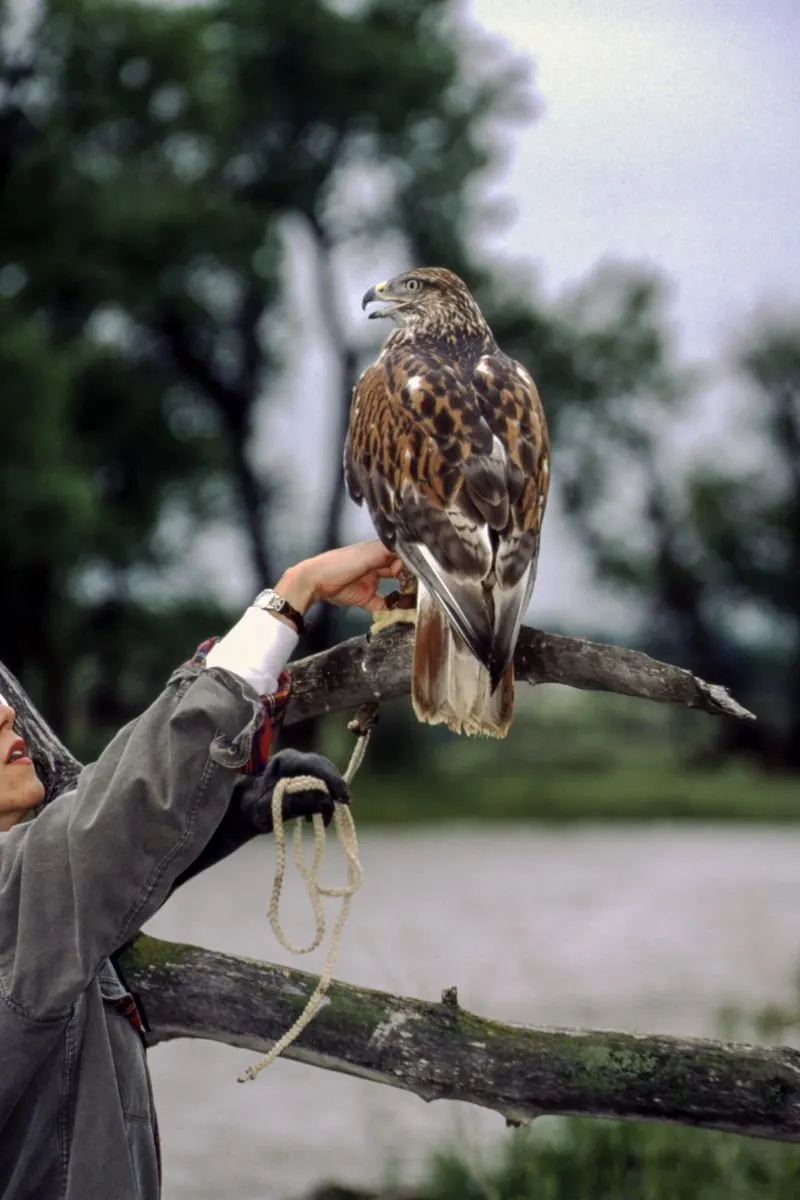
Write the dream down the moment you wake. The details fade fast, and the hawk’s direction in the dream usually matters more than you’d guess.
Where scripture puts the hawk
The hawk isn’t a major character in the Bible, which makes each appearance worth reading slowly. Job gives us the most. Before God speaks from the whirlwind, Job himself tells his friends where to look for wisdom.
But ask now the beasts, and they shall teach thee; And the fowls of the air, and they shall tell thee: Or speak to the earth, and it shall teach thee: And the fishes of the sea shall declare unto thee. Who knoweth not in all these That the hand of the LORD hath wrought this? In whose hand is the soul of every living thing, And the breath of all mankind.
Job 12:7-10, King James Version. Job says this to Zophar, a friend who has just lectured him about how deep and hidden the ways of God are. Job’s answer is sharp and a little weary. You don’t need to be a scholar for this, he says. Every creature already knows whose hand made it.
This passage is the reason I take these signs seriously as a Christian. Scripture itself tells us to ask the birds and to expect an answer. The hawk you saw this week is one of those “fowls of the air,” and it knows something about the hand of the Lord that you might have forgotten.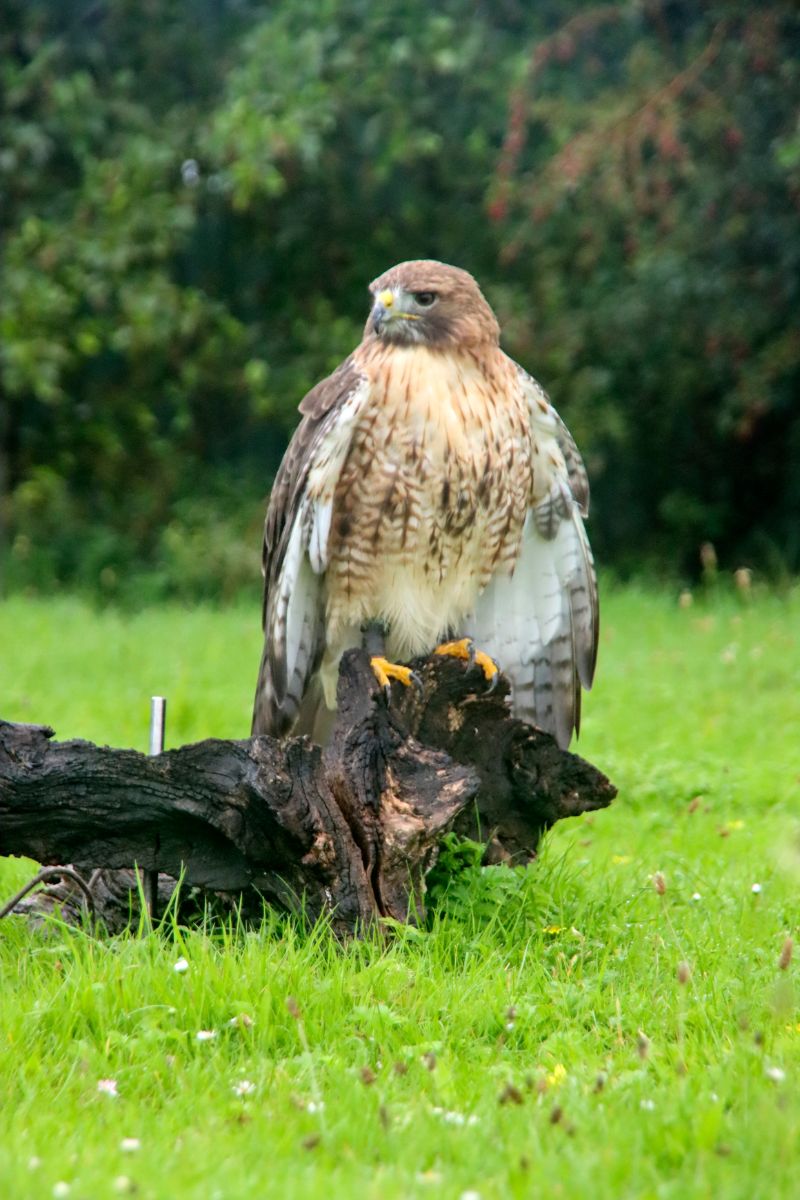
The hawk turns up in one more place, and almost nobody quotes it. In the food laws given to Israel, the list of birds not to be eaten includes “the hawk after his kind” (Leviticus 11:16, KJV). I read that as a small, strange grace. The hawk was set apart from the table. It was never given to Israel as food, only as something to watch.
Put those passages side by side and you get a hawk guided by God that was kept for watching, a teacher for anyone willing to ask. Is it any wonder it still stops people in their tracks?
Writers who stopped to watch
Some of the best words ever written about hawks came from people who weren’t trying to write about signs at all. They just looked up, and something in them answered.
Henry David Thoreau spent two years in his cabin at Walden Pond, and in the “Spring” chapter of Walden he describes a small, graceful hawk tumbling and rising in the spring air. “It was the most ethereal flight I had ever witnessed.” Then he adds a line I’ve copied into my notebook more than once.
It was not lonely, but made all the earth lonely beneath it.
Thoreau wasn’t a churchgoer in any ordinary sense, yet he saw it. A creature fully alive in the place God made for it makes the rest of us feel how far we’ve drifted from our own place. That ache isn’t a punishment. It is an invitation home.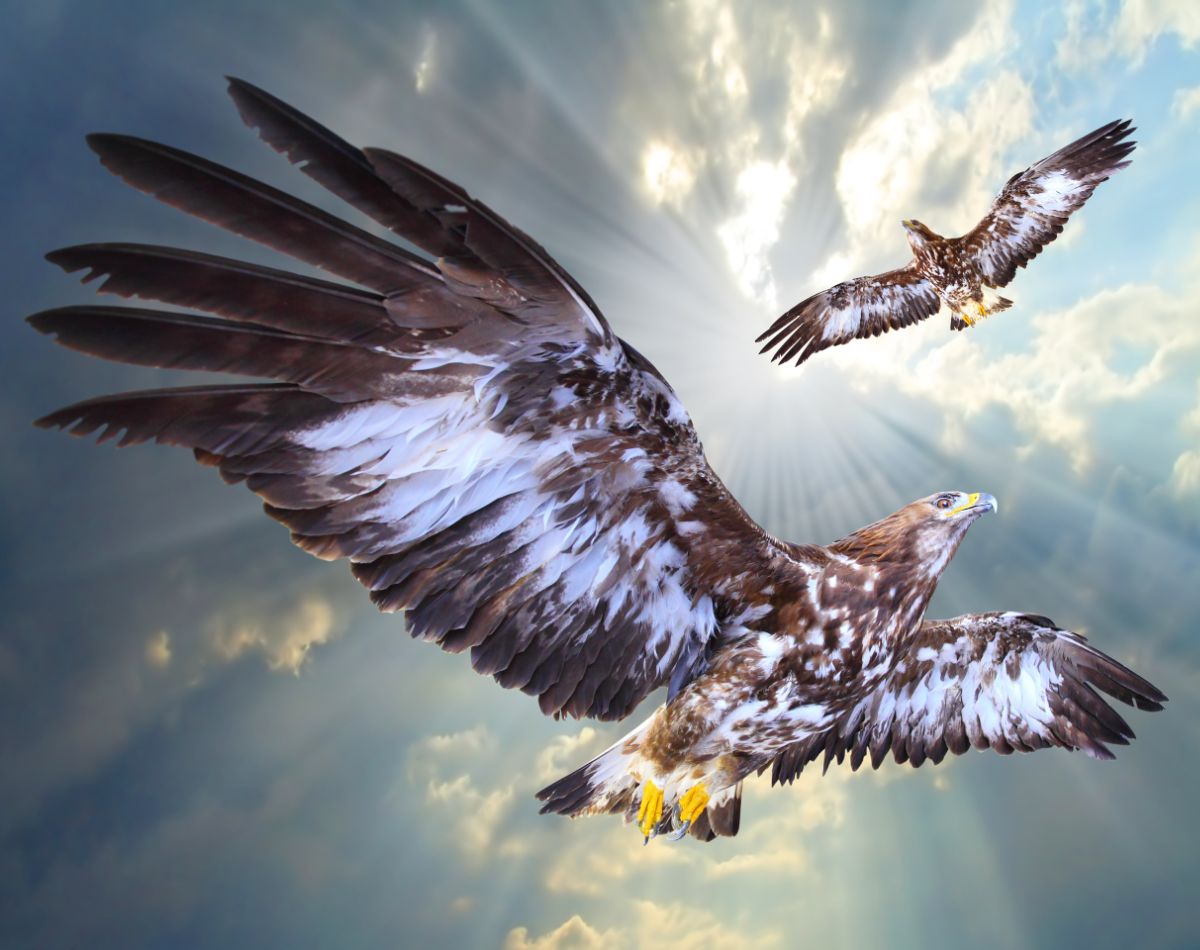
The Jesuit poet Gerard Manley Hopkins went further. In May 1877, shortly before his ordination, he wrote “The Windhover,” a sonnet about a kestrel, which is a small falcon that can hang still in the wind. He dedicated it “To Christ our Lord.” Watching the kestrel hold steady against the gale, Hopkins writes:
Brute beauty and valour and act, oh, air, pride, plume, here / Buckle!
Hopkins saw Christ in the falcon’s mastery of the wind, the strength and the beauty folding together into one act of surrender. The poem was not published until 1918, almost thirty years after he died. He never knew how many people would learn to see a hawk the way he did.
Shakespeare gives us the lighter moment. In Hamlet, the prince tells two old friends who’ve been sent to spy on him, “I am but mad north-north-west: when the wind is southerly I know a hawk from a handsaw.” In other words, I’m not as confused as you hope. I love that line because it’s what a hawk sign does for me. It clears my head enough to tell the real thing from the tool someone is trying to use on me.
But my favorite hawk story belongs to Saint Francis. During his long retreat on Mount La Verna, the mountain on which he later received the stigmata, a hawk was building its nest beside his cell.
According to The Little Flowers of St. Francis (in W. Heywood’s 1906 translation), it woke him every night a little before matins (the night prayer of monks), crying and beating its wings against the cell until he got up to pray.
When Francis was sick or more tired than usual, the hawk held back and called him later, as if it understood.
Think about that for a moment. The same bird that hunts by day became a saint’s alarm clock for prayer. That’s the hawk I want in my life, the one that won’t let me sleep through the hour I’m meant to spend with God.
Horus and the falcon’s two eyes
Long before the Bible was written down, the people of ancient Egypt watched the same birds hunting over the Nile.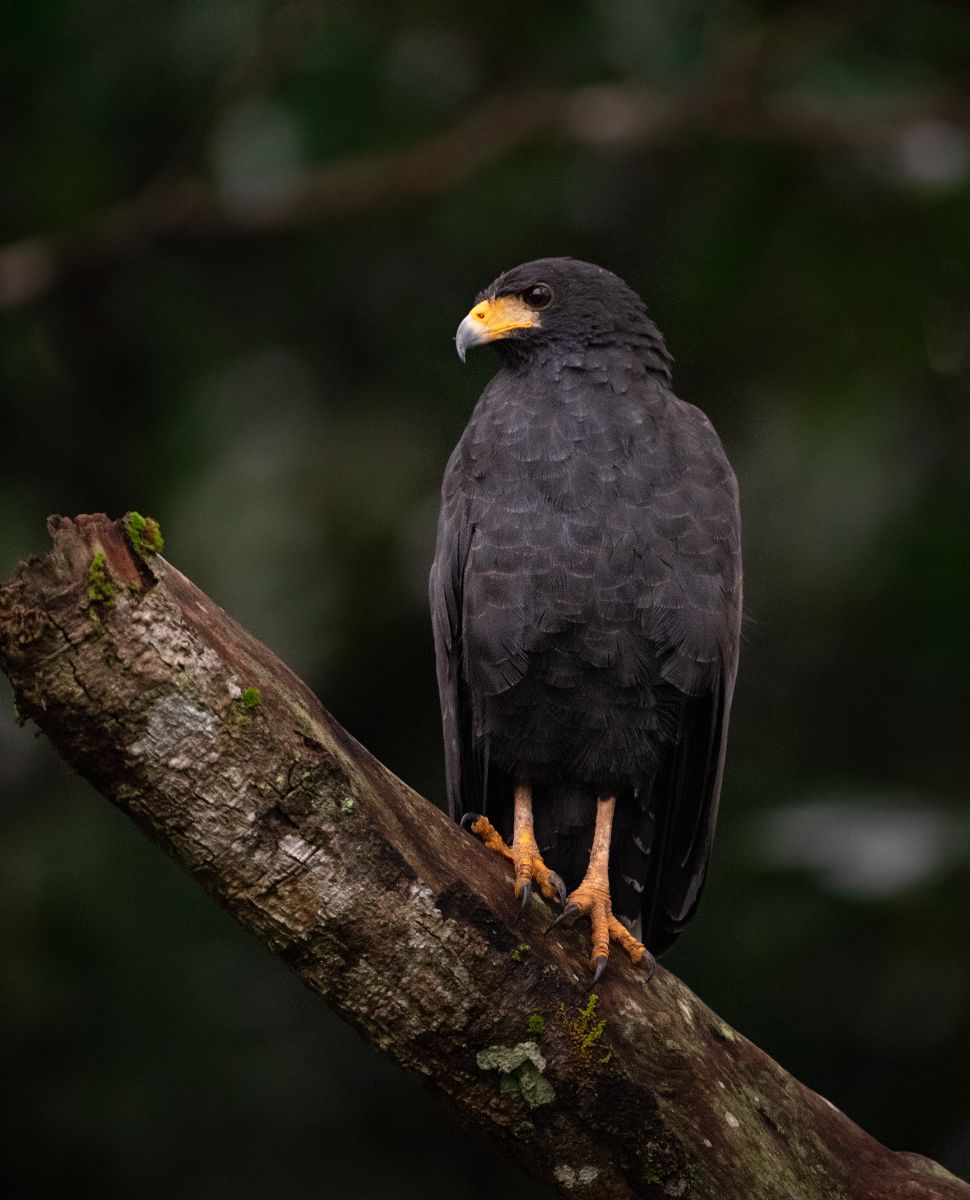
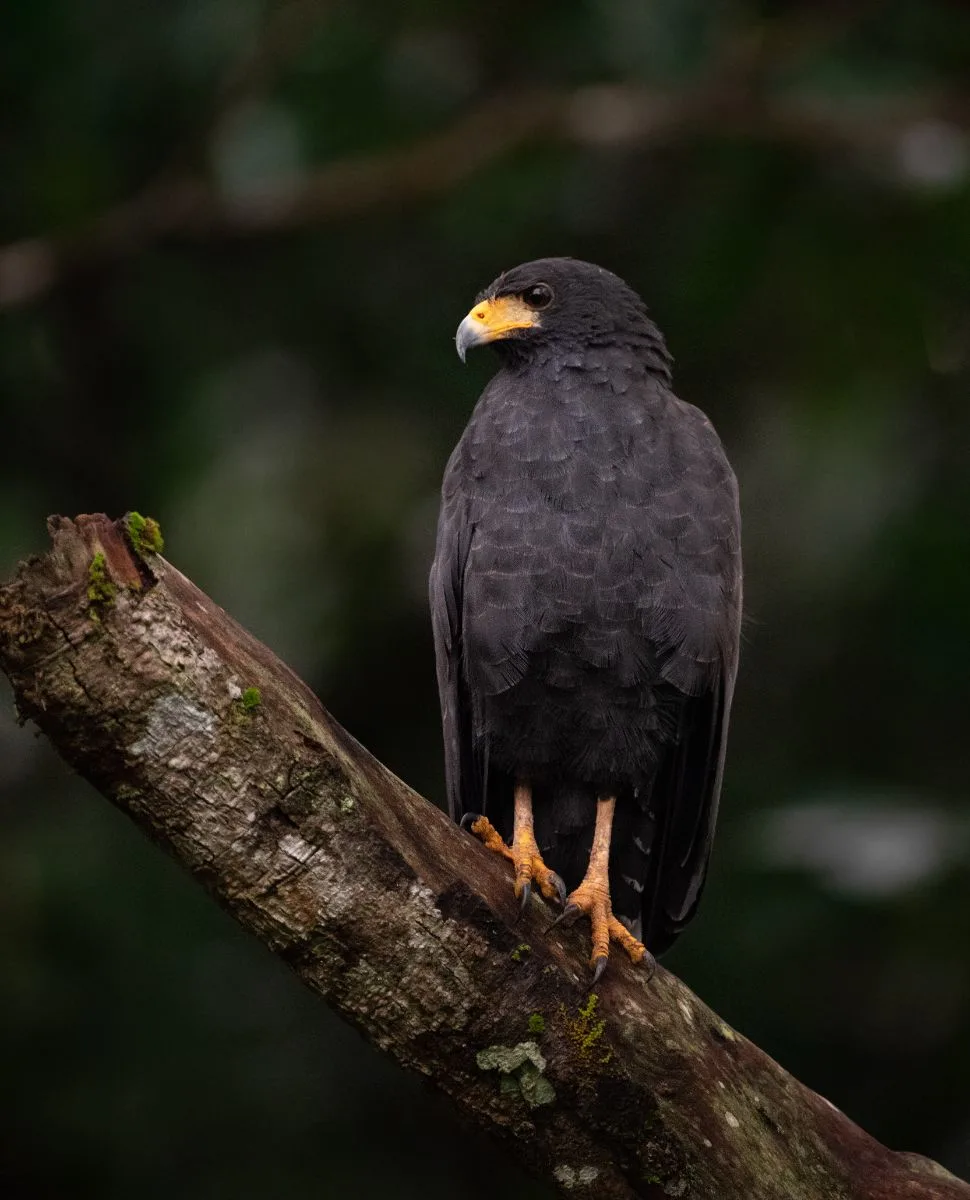
Their sky god Horus was shown as a falcon, or as a man with a falcon’s head, and falcon cults were spread across Egypt from very early times. According to Britannica, his right eye was the sun or morning star, standing for power, and his left eye was the moon or evening star, standing for healing.
I don’t borrow Egypt’s gods for my prayers, and I’d never ask you to. But I honor what those ancient watchers understood.
They looked at a bird of prey and saw two kinds of sight joined in one creature, the strong daylight eye that acts and the softer night eye that heals.
A hawk sign can ask for either one. Some weeks you need the courage to move. Other weeks you need to sit with a wound until it closes. The hawk knows the difference, and it can teach you the same.
A hawk-watching practice for this week
You don’t need a mountain or a monastery for this. You need a window or a patch of sky, and ten quiet minutes a day for seven days.
Each morning, before you open any screen, go to the window or doorway with the most sky. Stand with your feet planted and your palms open.
Read Job 39:26 aloud, slowly.
Then lift your eyes and look as far as you can, past the roofs and the wires and the bare tops of the trees to the line where the sky meets the earth, the way the hawk does from its height.
Breathe out the thing that’s been crowding you. Ask God for one clear sight for the day, just one, and wait in silence for about a minute. If a bird passes, give thanks. If none does, give thanks anyway, because the asking is the practice.
In the evening, take your journal and write about one of these:
- Where in my life am I flapping hard when I could be riding a current that’s already there?
- What have I been refusing to look at directly, and what would I see if I looked from higher up?
- Who has been a watchful hawk for me, calling me back to prayer when I drifted?
- If the hawk I saw could speak one sentence to me, what would it say?
Then close with this prayer, or with your own words if they come.
Lord, You taught the hawk to find the south wind. Teach me to find Yours. Lift my eyes above what frightens me, and let me see my life the way You see it. Wake me, as You woke Your servant Francis, for the hour I’m meant to spend with You. Amen.
The hawk you saw didn’t need you to understand it. It flew by a wisdom that wasn’t its own, and so do you. The next time one turns slow circles above your road, will you let it lift your eyes?
READ THIS NEXT: Seeing Paper Money In A Dream: Spiritual Meaning